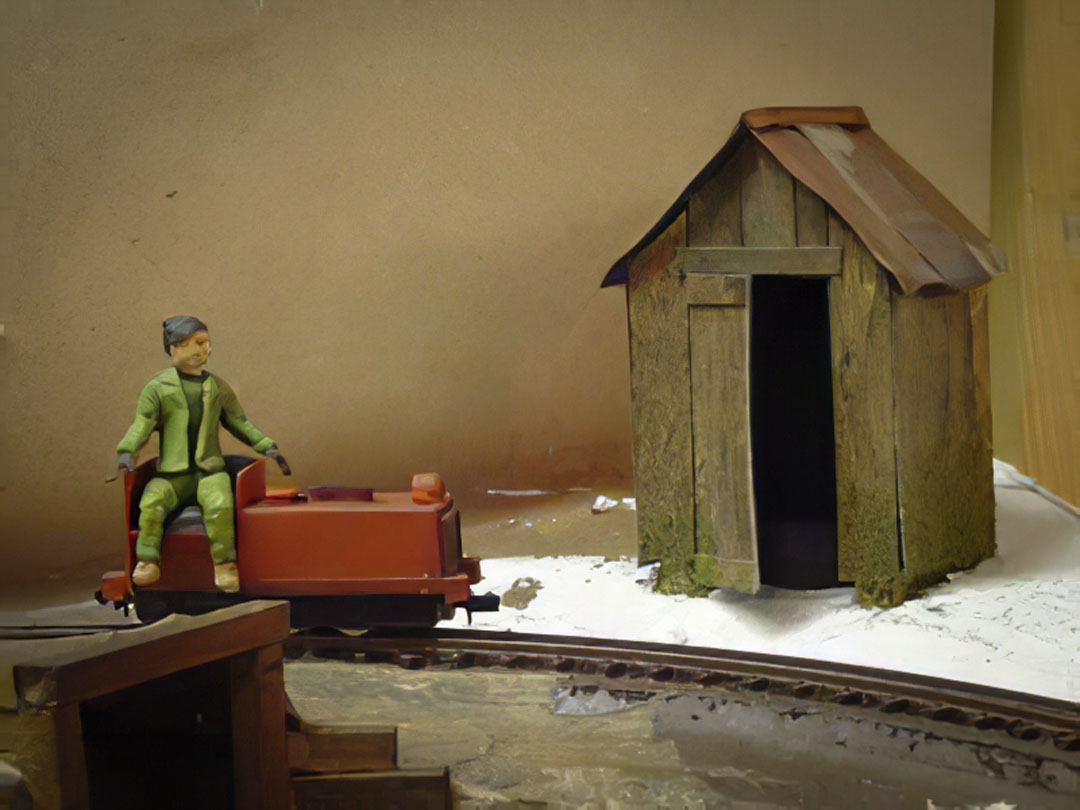
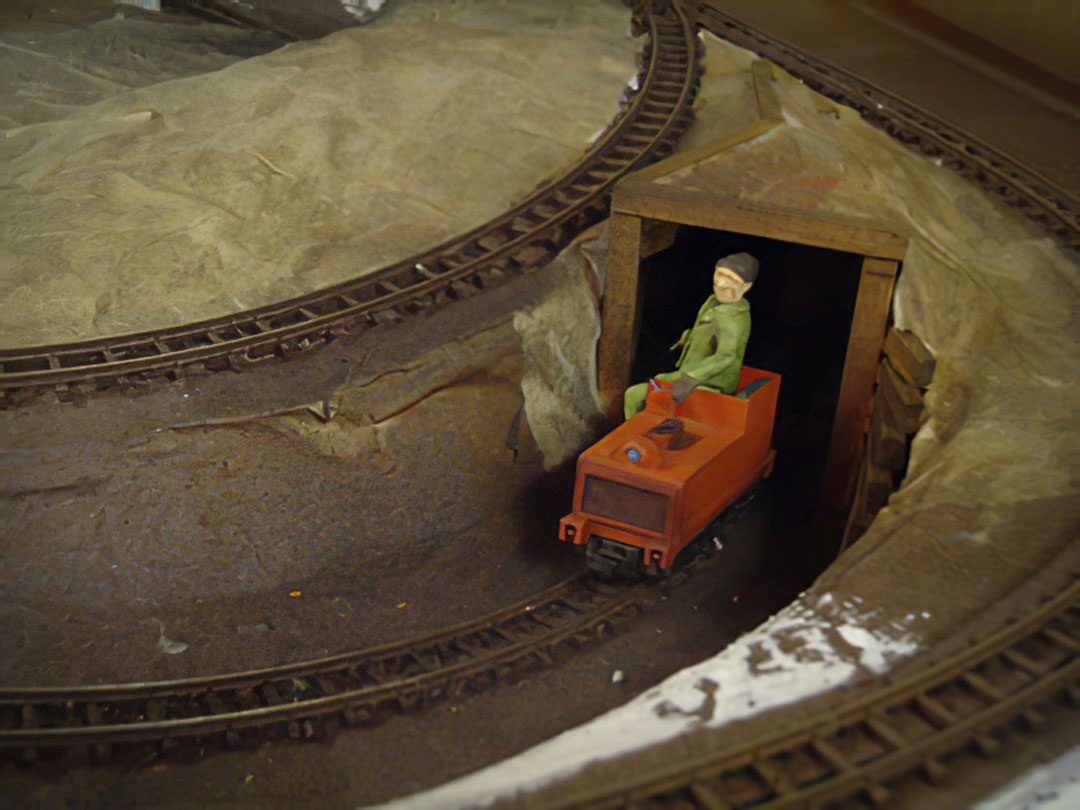
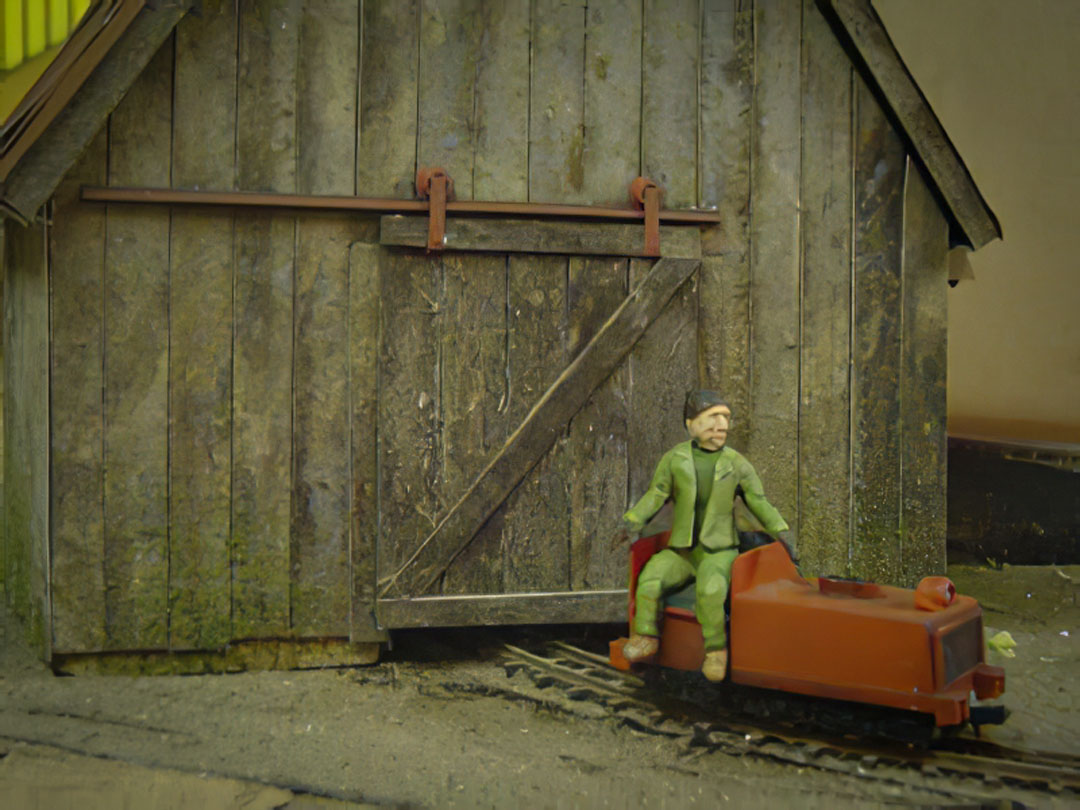
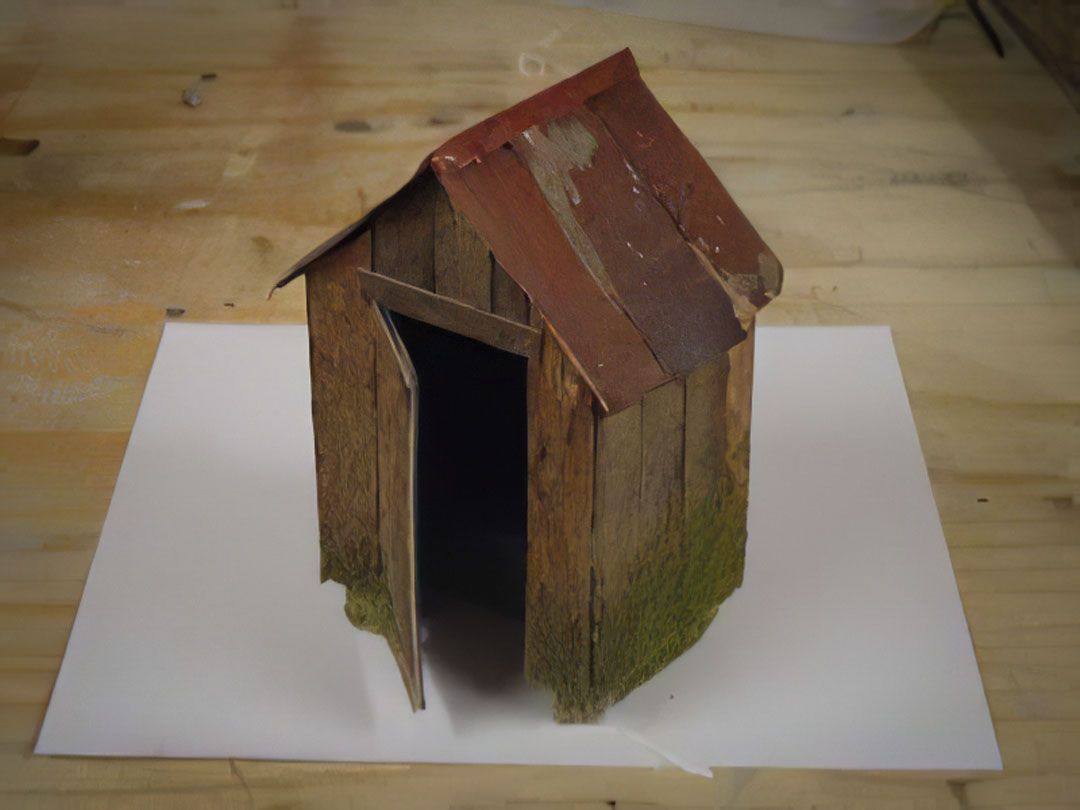
Pete’s Pumpkins


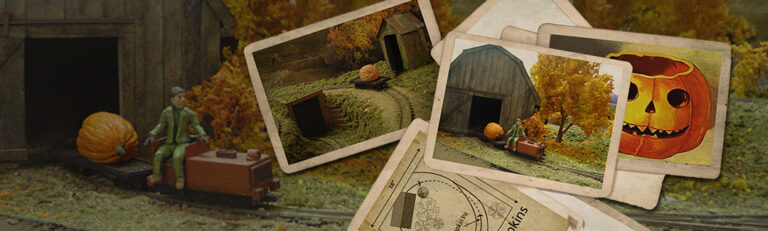
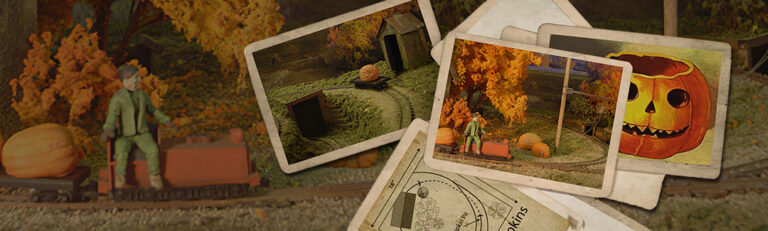
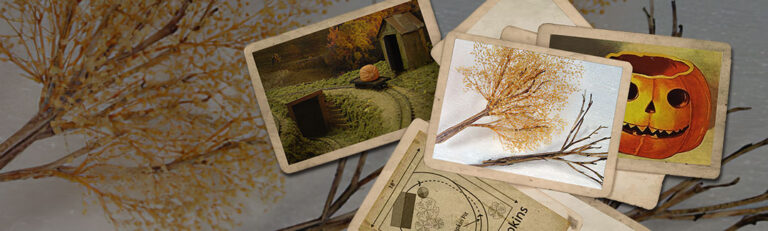
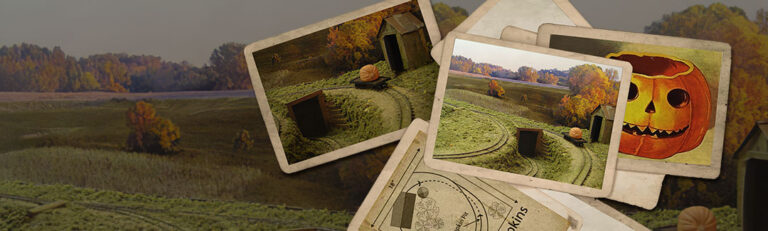
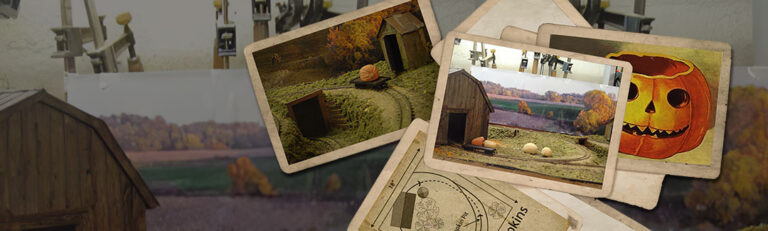
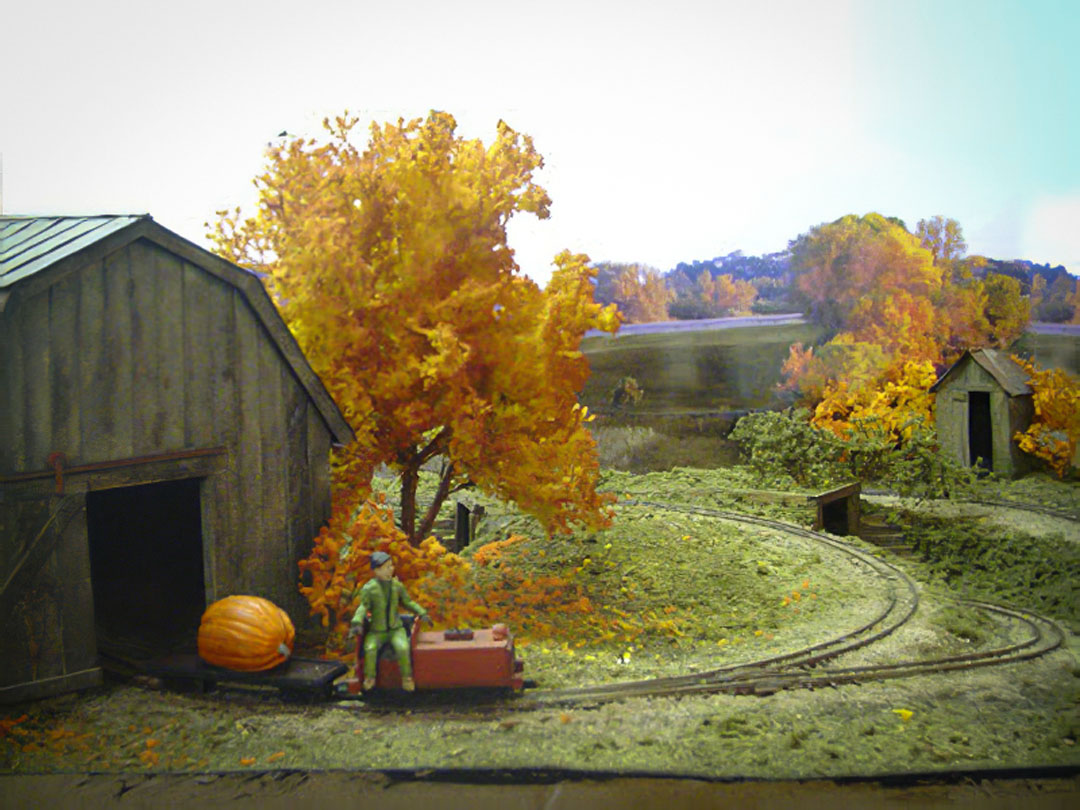
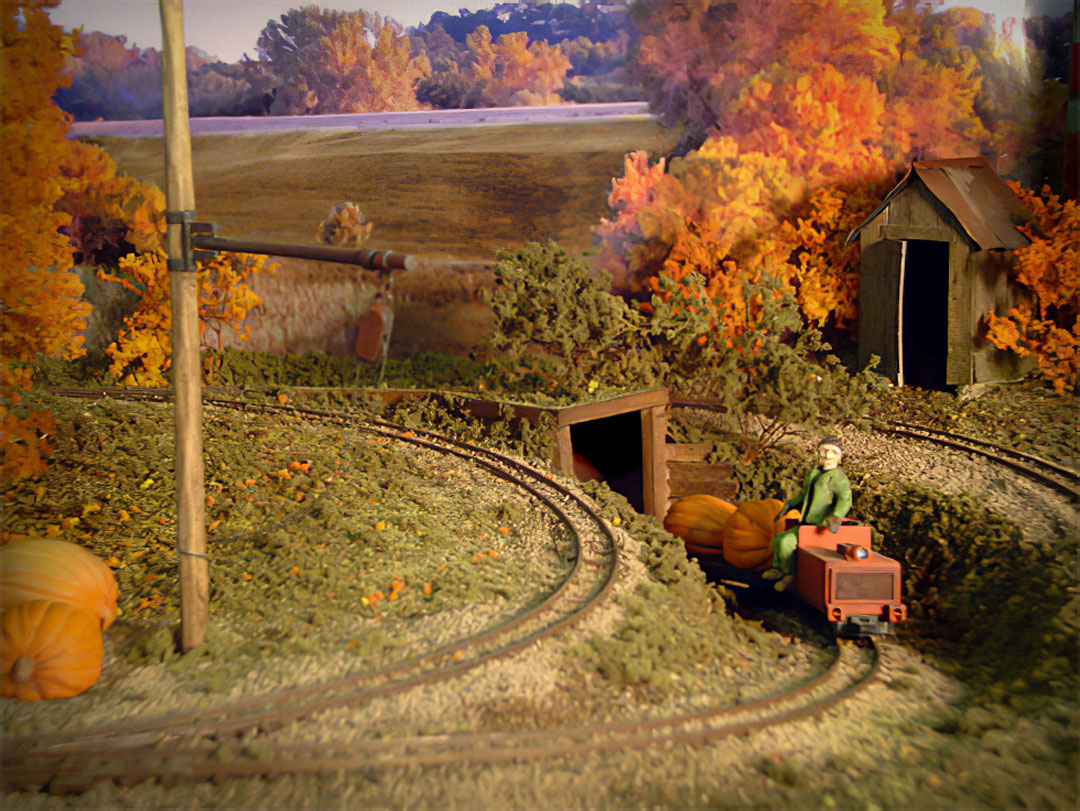
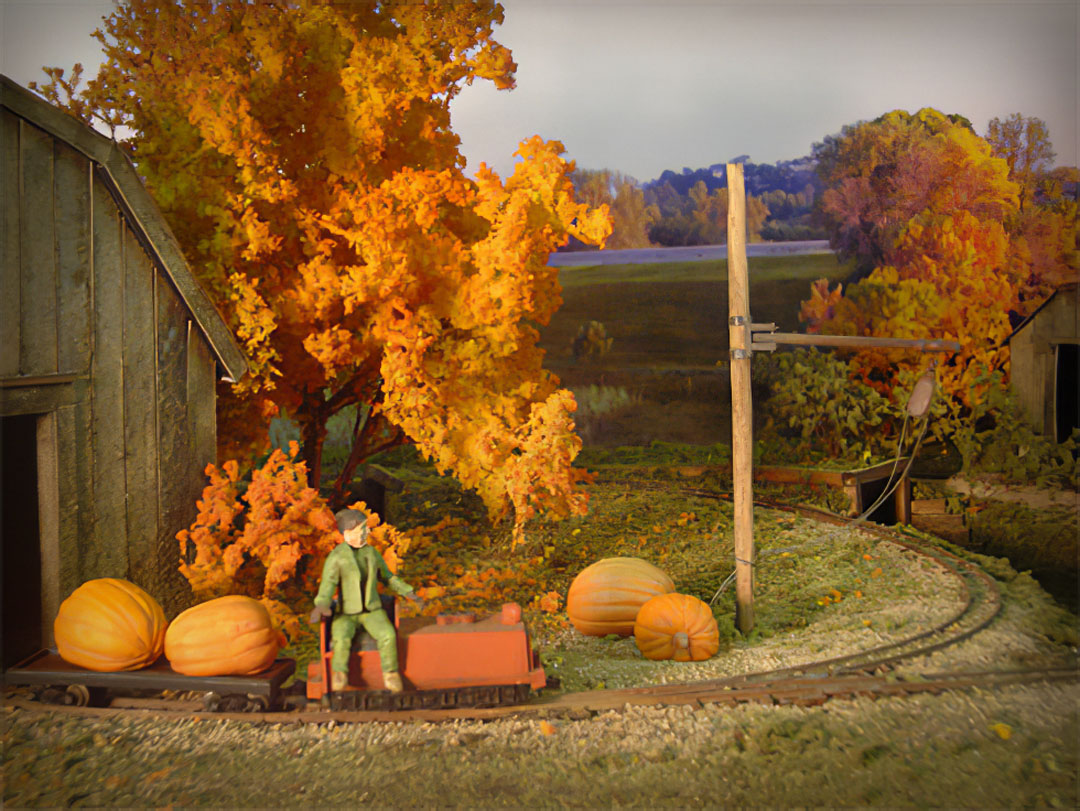
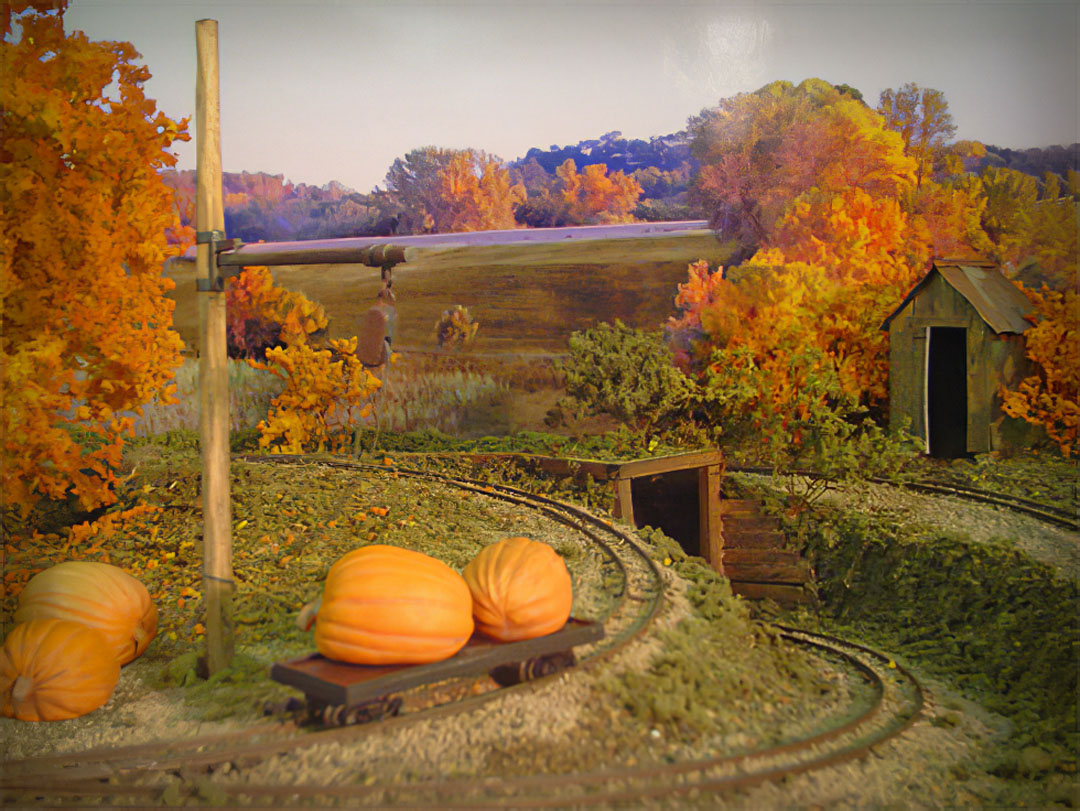
I spent some time and compiled a small gallery of images that document progress of the Pete’s Pumpkins model railroad over the course of the last two months. Before I started this project, I doubted that it was possible to build a model railroad in such a short time ‘ however having completed this railroad in 9 weeks has left me happily enlightened.

The project was a great learning experience, and I believe it highlights some of the winning characteristics of constructing a micro/small model railroad. First, space is easy to come-by as any model railroad two square feet of less can be easily stored and transported ‘ which in my case allowed me to casually work while surrounded by my family. Second, the small size lets you experience all the aspects of model construction in much shorter time frame. This lets the builder sample each phase of model building and gain an appreciation for the challenges each area presents. Likewise, it lets the builder learn what they have a natural affinity for ‘ be it scenery or motive power ‘ which might help to shape the choices they make on future projects. Third, the inherently ‘absurd’ nature of a micro/small model railroad lets the builder take creative liberties and create a fictional pike that isn’t bound by prototypical rigor. The builder can experiment, take chances, and ‘imagineer’ as they wish as there’s no real-life example to keep them accountable. This freedom ultimately shapes my fourth point; micro layouts are fun! Despite my limited experiences, I can honestly say that I have enjoyed building Pete’s Pumpkins as much as any other project I’ve tackled. I’ve learned a great deal over the last two months and I’m eager to apply these new found skills on other projects.

So what’s next?

Pete’s Pumpkins will likely go into storage, although I am considering retrofitting his pumpkin industry with firewood (the pumpkin market just isn’t as lucrative as one might think!)

A reader left a very pointed comment that asked a very good question ‘ ‘how does Pete unload the pumpkins?’ I went hunting to see if I could find some 1/32 tractors etc. But they were rather costly ‘ at least for this project’s budget. I decided that Pete, being a frugal farmer, would have likely rigged some sort of ‘block-n-tackle-hoist-thing’ from junk lying around the barnyard, so I decided to do the same. Using a pencil, a bamboo skewer, old n scale wheels and some scrap styrene, I ‘imagineered’ a yard hoist. The boom on the hoist actually swings, and the line will pull through the pulley. It’s not the front-end loader that I envisioned the farm having, but it will do the job!


With the backdrop in place and the basic colours of the layout defined, it was now time to start adding some trees and shrubs.

I built the shrubs using some unnamed dried floral product I purchased at Walmart a few years ago. I snipped bush-sized stems from the main stalk and glued the sprigs together using hot-glue; rolling the sprigs between my fingers as the glue began to cool. Working in batches of 10, I systematically spray-painted the sprigs flat brown, dipped them into diluted white glue, and then sprinkled on various colours of ground foam. I finished by spritzing each bush with a generous amount of hair spray, and then stuck each bush into holes in a cardboard box to dry.

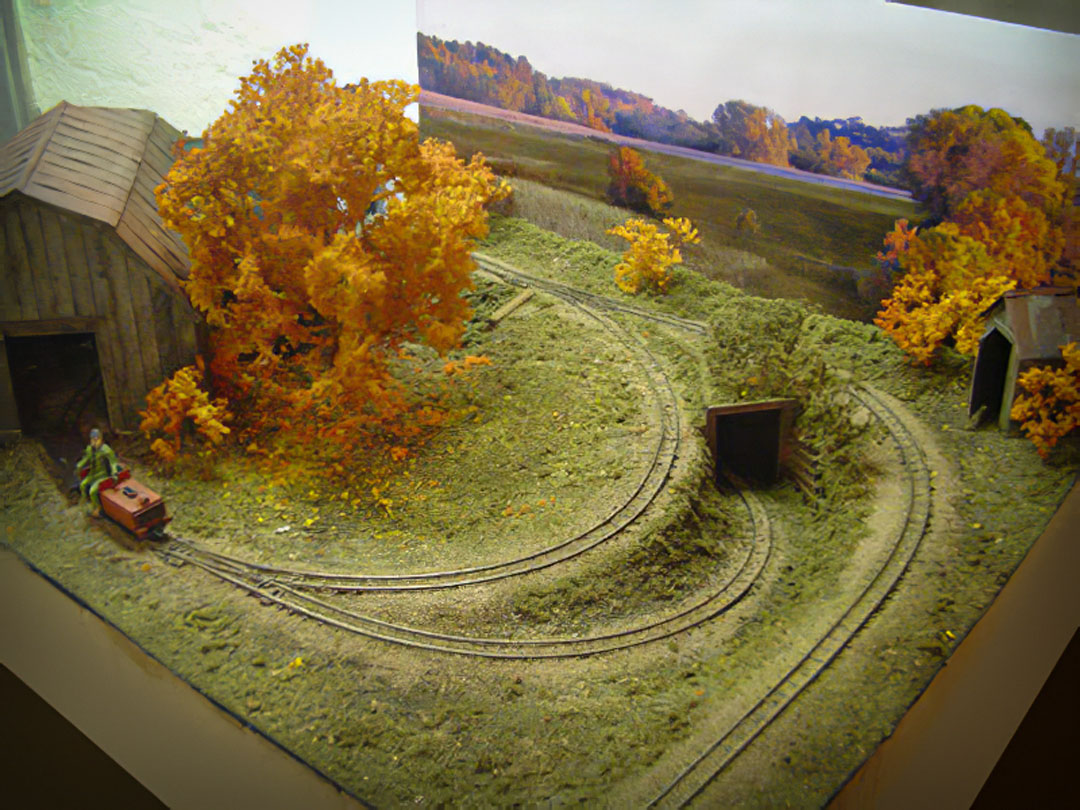
While waiting for the bushes to dry, I began construction on the large tree that would grow beside the barn. A few weeks ago I noticed that the dying lilies in our garden left long woody stems with forked ends that could work as a basic tree armature. I gathered up as many stalks as I could find and began hot-gluing them together until I had created a basic tree armature. I then created branches by combing a few sprigs of the dried weeds in the same fashion that I made the bushes, and then attached each of these sprigs to the basic armature of the tree using hot-glue ‘ working my way from the center of the tree outward. Once I was happy with the general shape of the tree, I again applied a coat of flat brown spray paint and allowed the tree to dry. Once dry, I applied successive coats of hairspray and ground foam until I had built up the branches to resemble leafy bows. I then misted the entire tree with a few blasts of red oxide primer to add some colour variety.

Once everything was dry, I punched holes in the scenery using an awl, and planted the shrubs with a dab of white glue. For the tree, I drilled a larger hole near the barn, filled it with hot glue and pressed in the tree until the glue had set.


The first test application of the backdrop revealed a few issues I wanted to resolve. Firstly, as the image I was using was small it didn’t scale well when printed large ‘ the image quality degraded too much. Secondly, the colour of the backdrop wasn’t quite right.

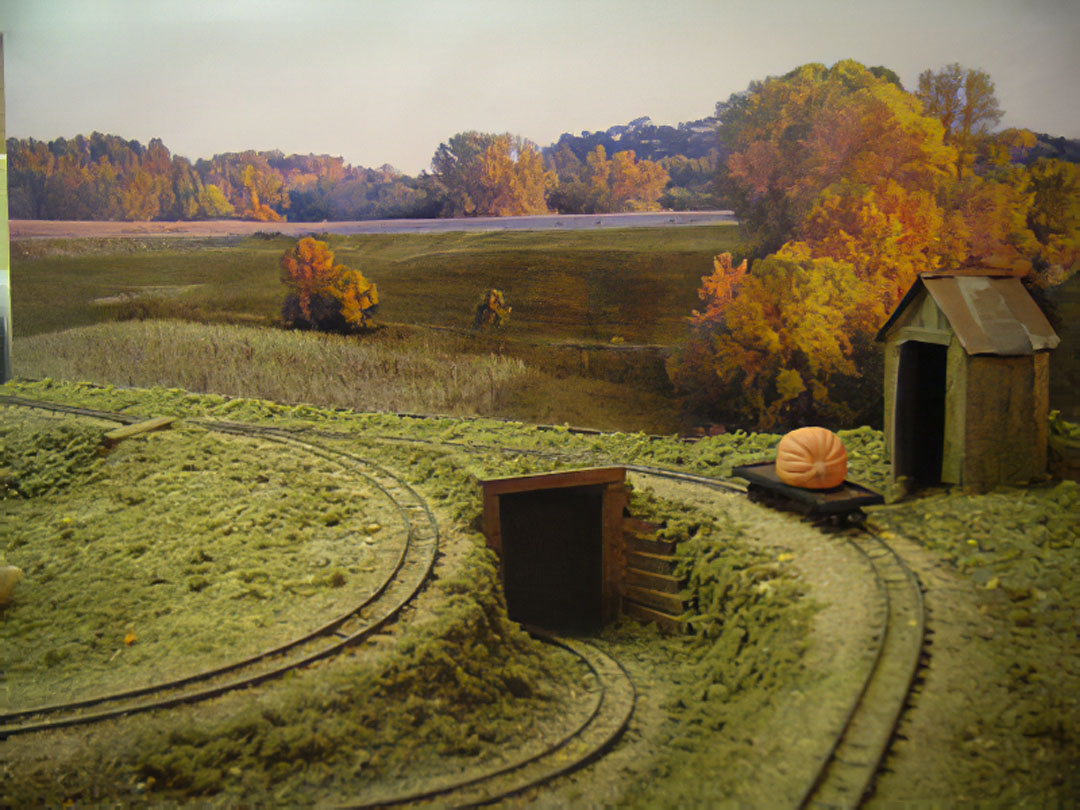
I purchased a small copy of this image from istockphoto.com for $1.00. I colour-corrected the image such that it lost its ‘peach’ hues, and then I re-coloured the fields so that their colours more closely matched the ground cover I had applied. Finally, I scaled the image to the appropriate size and subtly applied paint daubs filter ‘ just enough to correct the graininess of the image. I cut the image to fit, and attached it too the hardboard using rubber cement.

The first test application of the backdrop revealed a few issues I wanted to resolve. Firstly, as the image I was using was small it didn’t scale well when printed large ‘ the image quality degraded too much. Secondly, the colour of the backdrop wasn’t quite right.

I purchased a small copy of this image from istockphoto.com for $1.00. I colour-corrected the image such that it lost its ‘peach’ hues, and then I re-coloured the fields so that their colours more closely matched the ground cover I had applied. Finally, I scaled the image to the appropriate size and subtly applied paint daubs filter ‘ just enough to correct the graininess of the image. I cut the image to fit, and attached it too the hardboard using rubber cement.

With the groundcover in place it was obvious that before I could precede any further I would need to install the backdrop ‘ as I couldn’t add scrub brush and trees without it. I had every intention of painting the backdrop, but as I was surfing the web for reference images it dawned on me that I might be able to print a suitable backdrop ‘ which would save me a great deal of time and effort!

I found a very nice image of rolling farm fields with a smattering of autumn trees that looked like a good fit for Pete’s Pumpkins; however the image was far too small to create a decent print. Rather then search for a higher resolution image, I elected to apply a few Photoshop filers to the image to give it a more ‘painterly’ look. The end result wasn’t sharp, but suggested the scene very suitably. After trimming the printout and eyeing the results, I decided that while the backdrop helped the model immensely ‘the colour wasn’t right. I discarded the print, resolving to correct the colours to more closely match the foreground scenery.

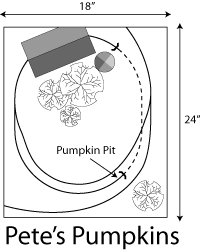
While I’ve been working on the layout I’ve been trying to decide how to justify the existence of a narrow gauge railway on a pumpkin farm. I decided that the only reason a pumpkin farmer would need a railway would be because either he has a high volume of goods to transport, or the goods are quite heavy. It seemed unlikely that a farmer would use a railway to transport pumpkins when a tractor and wagon would suffice ‘ however ‘ it seemed reasonable to presume that if the pumpkins were large, too large to load onto a wagon, that a farmer might use a railway. Hence, I’ve decided that Pete of Pete’s Pumpkins specializes in growing competition-grade monster pumpkins.

With the industry of the model railway finally decided upon, I set to work in creating a flatcar and some pumpkins for Pete. I shortened the underside of an old N scale boxcar, and glued on a new deck I built using some bits of styrene. I gave the flatcar a quick coat of flat-black spray paint, as well as some red oxide and dark brown.

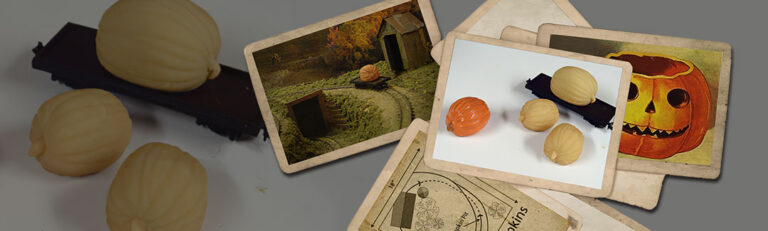
I next modeled some ‘monster’ pumpkins. Using the leftover Sculpy I managed to model four very large pumpkins. Monster pumpkins aren’t the typical pumpkin shape ‘ they look like they’ve collapsed under their own weight and have a pancake-like look. The models I created represent competition-grade pumpkins with an approximate weight of 350-500lbs each ‘ which now makes having a railway much more plausible!

A busy week has kept me from making any progress on the layout ‘ so when I did manage to steal away a few hours, I decided to maximize the time. I wanted to start scenicing the layout, so I decided to add the groundcover and ballast the track together to save time. I applied a coat of full-strength white glue to the hills, banks and roadbed sides before sifting on combinations of dirt, blended leaves, ground foam, twigs, rocks and ballast. When I was satisfied with the results, I misted the entire layout with water and applied diluted white glue. Hopefully everything will be dry by tomorrow!

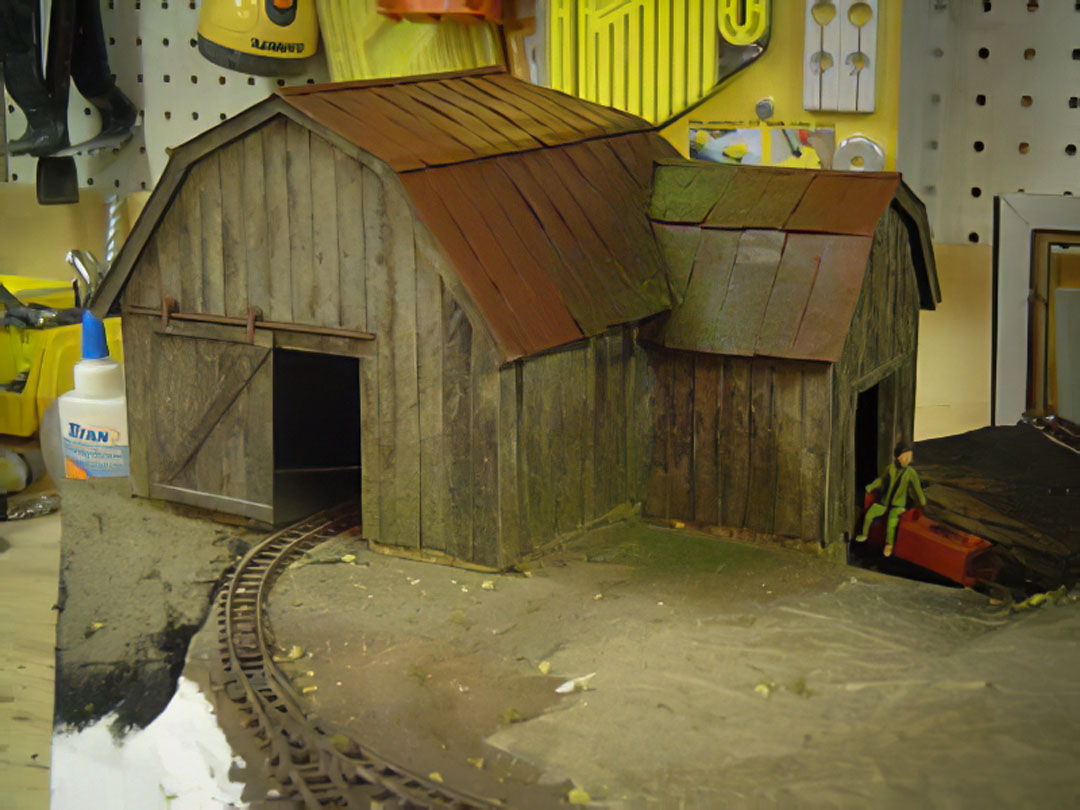
A few nights of scoring, bending, painting a gluing have paid off, and I think I can say the barn is done. Working in N scale sure spoils you when it comes to the quantities of materials needed! This structure was a pig!

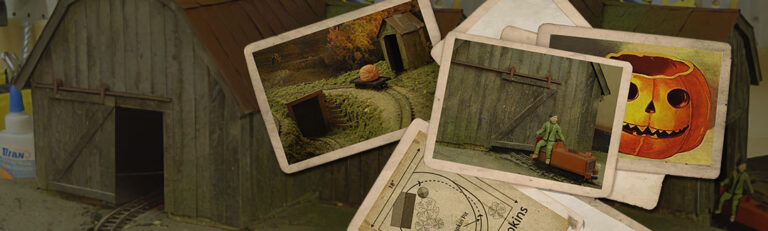
I built the barn door using some bits of rail, the wheels off an old N scale boxcar and some scrap styrene. The door can slide along the rail so I can open or close the door depending on my mood.

I’m pleased with the barn, although it would certainly fail close scrutiny. Then again, this is a ‘fun’ layout that I’m building just for the experience, so I’m not too worried about its accuracy. I’m likely not going to super-detail it, however knowing myself fairly well, I will likely add things over the next few weeks in the moments where I procrastinate from building trees!

(Excuse the shine on the roof of the barn ‘ the dullcote hasn’t dried yet)

I spent the evening sheathing the barn. In a few short hours I managed to install most of the barn boards atop the foamcore base ‘ less the fact I ran out of boards! Because the boards are cardboard, they tended to curl once installed, some more then others, which gave a nice effect. Anytime a board started to curl too much, I simply dabbed a little hot glue on the underside and stuck it in place.

Eager to see how things would look, I have the entire structure a quick weathering before replacing it on the layout. I first spooned dirt onto each of the walls, and brushed it away using a makeup brush. When I was happy with the effect, I sprayed the dirt with dullcote to set it in place. I next sprinkled some fine ‘earth’ ground foam onto the wet dullcote near the base of the structure, followed by a very light dusting of light green. The effect is that of a damp, mossy barn.

There are a few major details I need to add ‘ namely the doors, and the roof, however at this point I’m happy with the results for the effort.

With the barn structure built I was ready to start adding the siding and roofing. I had figured out how I wanted to model each, but having never tested either technique I thought it best to create a ‘test’ piece. As I wanted to add a structure to the right side of the layout, I decided to model an outhouse to try out my ideas.

In the end I was very happy with the results, and I am ready to start sheeting the barn!

Building the Outhouse

I built the privy in the same manner I made the barn ‘ hot gluing foamcore to create the basic structure, and adding a flap of cardboard from a cereal box as a door.

Modeling Barn Boards

I first covered a piece of cardboard with a mixture of tan and gray paint ‘ rather then mix the two colours consistently, I opted to leave them as mottled a possible to give the card some colour variation. I sprinkled some fine ballast onto the wet paint ‘ ballast colour wasn’t important as I was going to use this as an abrasive. I then dragged a scrap piece of foamcore across the surface of the card (in a uniform direction) until I had removed the majority of the ballast, and the surface of the card had numerous vertical scratches. Once dry, I rubbed off the remaining ballast with my fingers and applied a light misting of black spray paint to add some small black flecks. Again, I waited for the paint to dry and applied a thin blotchy wash of burnt umber oil paint and varsol to the surface of the card. I cut the card into scale boards, and mixed them up ‘ reversing some of the boards end for end in an attempt to hide all seams. I painted the privy flat-black and attached the boards one at a time with white glue ‘ making sure to leave a small gap between each board. Once the glue had dried, I weathered the structure with some real dirt, applied some Testor’s Dullcote, and dusted on some fine green ground foam to represent moss.

Modeling Corrugated Steel Roofing

I cut some heavy tinfoil into scale siding pieces approximately 2×8 feet in size. I laid the foil on a soft piece of pine, and placed a large bolt atop the foil at one end. Using a piece of hardwood as a pressure block, I pushed down firmly on the bolt with the block of wood, and rolled the bolt along the length of the foil. The threads of the bolt dented both the foil and the wood, creating the characteristic corrugated pattern. I sprayed the individual roofing pieces with black/brown/red oxide spray paint to create a dull weathered look. Once the paint was dry to the touch, I dragged a rag along the surface of the foil, and removed some of the paint ‘ exposing the foil beneath. I hot glued the sheeting to the roof, and applied alternating coats of dirt and dullcote for weathering.


With the landscape contours in place, Pete’s Pumpkins model railroad was finally starting to take shape, thus, it was time to add the barn. Having only previously scratchbuilt structures in N scale, I wasn’t used to the material needs of a large scale structure ‘ I could build and entire N scale city with the styrene needed to build a 1:32 barn! Thus, I chose to build the barn from foam core, as it was significantly cheaper then styrene, and wouldn’t need internal bracing.

Foam core is a wonderful building material; it cuts cleanly, is quite rigid, lightweight, and has the benefit of not melting under the heat of a glue gun.

Construction went quickly, and in the course of an evening I was able to build the entire superstructure. The mitres etc. aren’t perfect, but that won’t matter as all of the surfaces will be sheathed in wood siding and metal roofing.

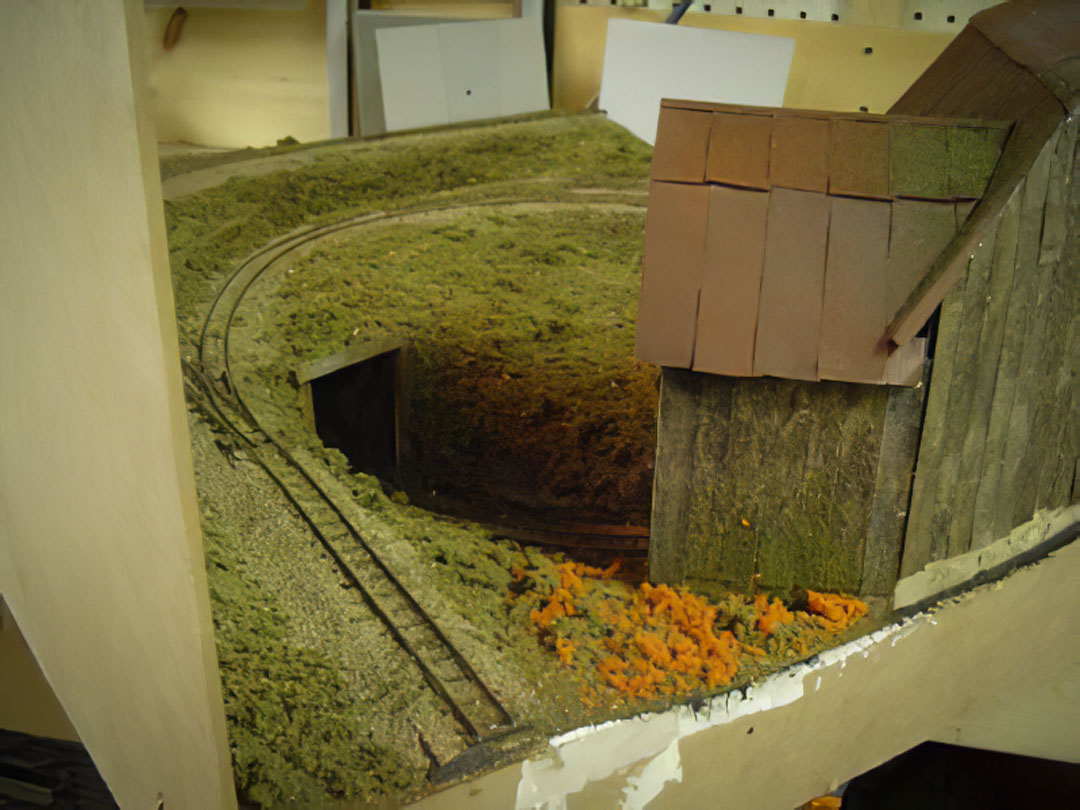
I carved out trenches in the baseboard (another benefit of Styrofoam scenery) and set the barn’s foundations into them so that the rear of the structure was built into the hillside. It was nice to see how the layout will take shape ‘ however I do think that visually things are too heavily weighted to the left side, so I’m going to consider building a smaller building for the rear right corner to help balance everything.


I managed to finish rouging in the second tunnel portal, and contoured the surrounding landscape.

I stained the wood portals with a mixture of burnt-umber oil paint / varsol, and then lightly over-sprayed everything with black spray paint. (I made sure I stained the wood before I started gluing the surrounding scenery as the glue would resist the stain later.) I applied a thick coat of white glue around the portals an added some loosely wadded balls of paper towel to help flesh-out the hills, and then applied a smooth layer of paper towels and white glue to refine the contours.

Finally, I smoothed out some of the surrounding scenery with drywall mud. I have come to prefer drywall compound over regular plaster because of its working time. Granted, it shrinks and is not as hard as plaster but as I’m not relying on the mud for structural stability, I’m not too worried. It’s also easier to sand, and cleans up very easily.


Having given the track 24 hours to dry, I finished removing the ties in the areas damaged the previous evening without incident, and successfully ran a few test laps with Pete’s Speeder around the oval; all rail joins and turnouts were smooth.

I weathered the ties and rails by applying several light coats of different coloured spray paint, alternating light mists of black, tan and brown. I waited for the paint to dry before scrubbing the tops of the train rails with a fine emery paper, removing the excess paint.

With the track now complete, I focussed my attention to the tunnel. I ripped some scale 6″x6″ lumber on the table saw, and with glue gun in hand, began installing the tunnel portals. A great deal of time and effort was spent trying to create a minimally-intrusive tunnel configuration ‘ bearing in mind that both the upper and lower track levels needed adequate clearances, and the scenery would need to look moderately believable.

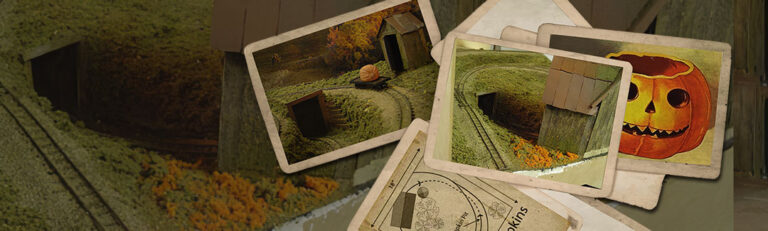
By evening’s end I managed to create one of the two portals. The configuration is absurd, as it would have been far more efficient to have simply created a bridge rather then a shallow tunnel, however I like the idea of the speeder disappearing into the ground, and hopefully appropriate scenery treatment will add some believability.


Next Page »